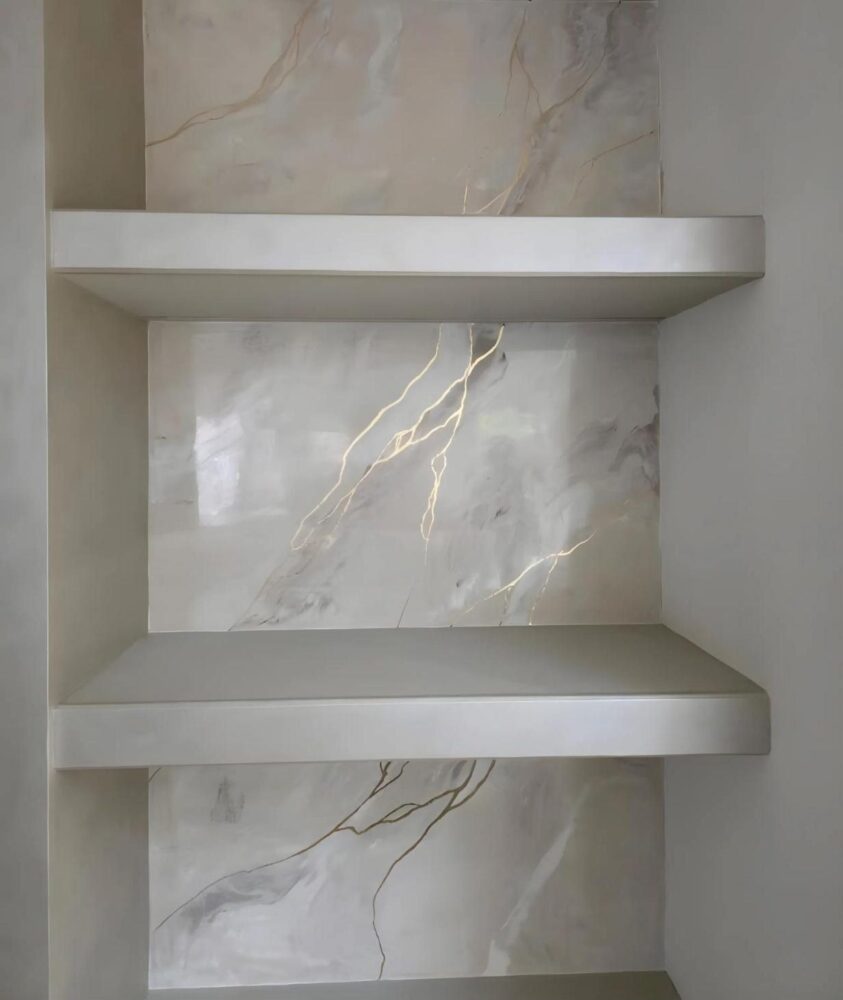
When walls look tired, there are two main options. A re-skim puts a thin new finishing coat over the existing plaster. A replaster takes the old plaster off and builds the wall back up from the masonry. A re-skim is quicker, less messy and usually cheaper, but it only works if what is underneath is sound.
Signs a re-skim will do
- The plaster is firmly attached and sounds solid when tapped.
- The problems are on the surface: hairline cracks, old filler, uneven patches, damage from stripping wallpaper.
- You want a smoother finish on walls that are otherwise sound.
Signs you need to replaster
- Hollow or blown plaster. Tap the wall with your knuckles. A dull, hollow sound means the plaster has come away from the masonry behind.
- Crumbling or soft plaster that comes away when you press or scrape it.
- Damp damage. Salts, staining and soft plaster after damp, especially low on walls. The cause of the damp needs fixing first, and the plaster usually needs replacing.
- Large cracks or bulging areas.
- Failing ceilings. Old lath and plaster ceilings that sag or have come away from the laths are usually best replaced.
The middle ground
Often the answer is both. Hollow patches are cut out and replastered, then the whole wall is skimmed so the repair disappears. That is cheaper than replastering every wall and gives a uniform finish.
Older houses
Houses built with solid walls and lime plaster need care, because covering breathable walls in hard, impermeable materials can trap moisture. A plasterer who knows older buildings will choose materials that suit the wall.
After the work
Whichever you choose, new plaster needs time to dry before decorating, usually several days to a week for a skim and longer for thicker coats. Wait until it is an even light pink, then use a mist coat of thinned emulsion first.
Get an honest answer
{business} checks the walls when we quote and tells you honestly which they need. See skimming and plastering, or call {phone} for a same day quote.